In early 2026, the open-source community was set ablaze by a single project — **OpenClaw**, an open-source autonomous AI agent that amassed over 200,000 GitHub stars in three months, making it one of the fastest-growing open-source projects in history. Its mascot? A red lobster with open claws. The community affectionately calls it “the lobster project.”
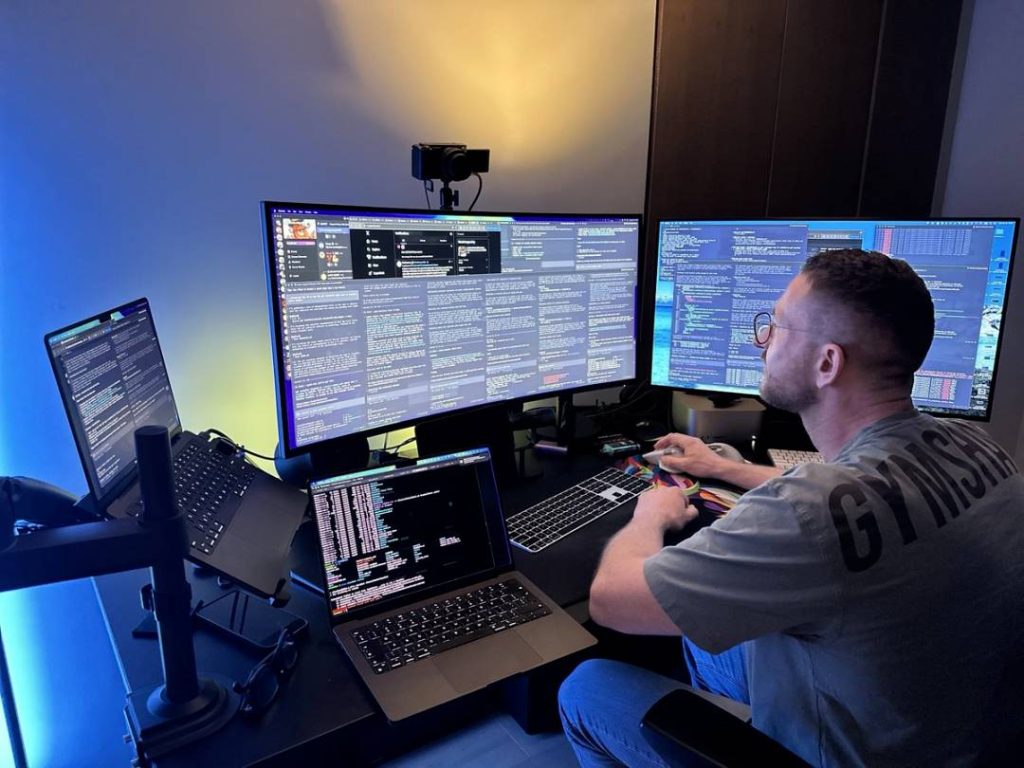
The Founder: Peter Steinberger — From a PDF Empire to AI Pioneer
From Rural Austria to Silicon Valley
Peter Steinberger grew up in rural Austria. At age 14, a summer guest introduced him to a personal computer, igniting his obsession with technology. He studied software engineering at Vienna University of Technology, worked as a senior iOS engineer in Silicon Valley, and later returned to teach mobile development at his alma mater.
PSPDFKit: A 13-Year PDF Empire
In 2011, while waiting six months for a U.S. work visa, Steinberger founded PSPDFKit to solve the surprisingly difficult problem of PDF rendering on iPads. Over the next 13 years, he built it into the gold standard of PDF management — serving top-tier clients including **Apple, Dropbox, and Autodesk** — with its code powering PDF functionality on over a billion devices. In 2023, he exited the company in a reported €100 million deal.
But behind the success was deep burnout. Crushed by CEO responsibilities — board meetings, co-founder conflicts, relentless customer demands — he felt, in his own words, “like Austin Powers where they suck the mojo out.” He couldn’t write code anymore. He just stared at the screen, feeling empty.
So he booked a one-way ticket to Madrid and disappeared.
Called Back by AI
Retirement turned out to be worse than the grind. Steinberger found that “if you wake up in the morning and you have nothing to look forward to, no real challenge — that gets very boring, very fast.”
In April 2025, a spark returned. While building a simple Twitter analysis tool with AI, he realized AI had undergone a **paradigm shift**. It could finally handle the repetitive plumbing of code, freeing him to focus on the high-minded act of building.
“I was annoyed that it didn’t exist, so I just prompted it into existence.” — Peter Steinberger on OpenClaw’s prototype
This became his 44th AI-related project since 2009. But this time, everything was different.
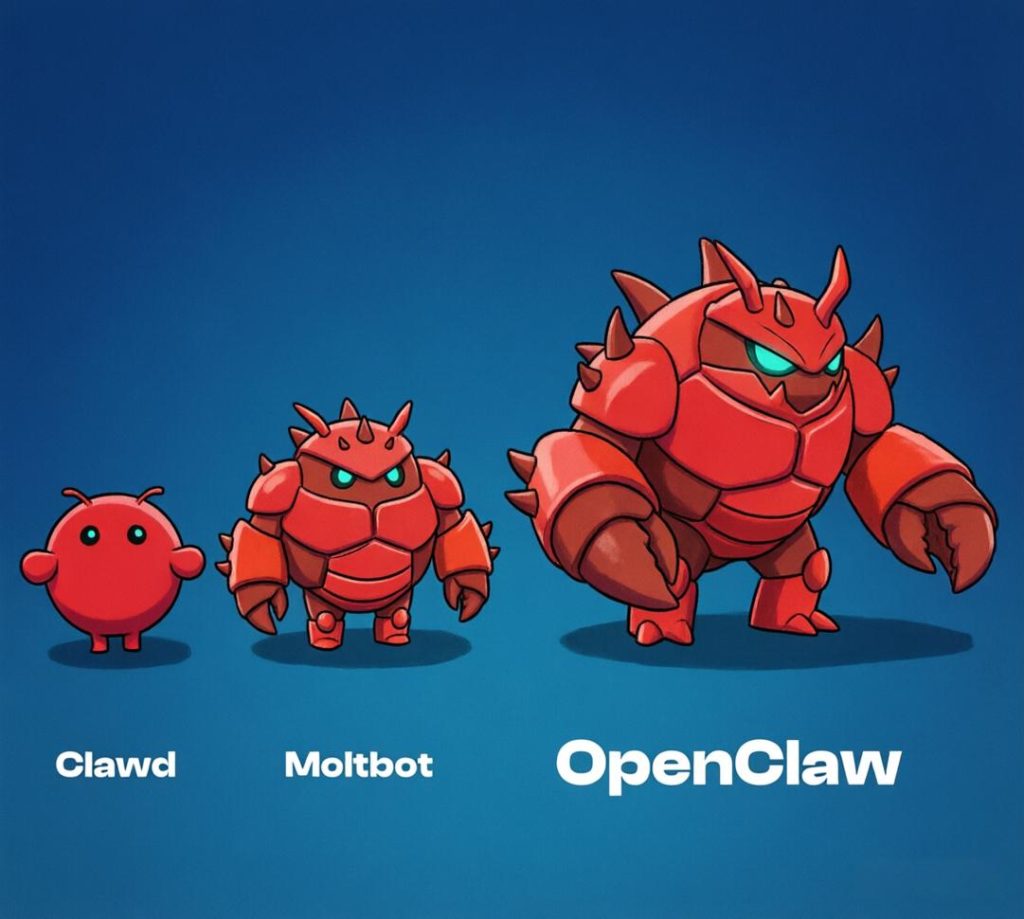
The Naming Journey: Seven Names, One Lobster
OpenClaw’s naming journey is arguably one of the most convoluted branding stories in tech. From the first commit to the final name, it went through **7 iterations**.
Phase 1: WhatsApp Relay → Warelay (November 24, 2025)
It started with a simple need: while traveling, Steinberger sent voice messages to his wife through WhatsApp, and Claude Code CLI automatically transcribed them. “This is too useful,” he thought. In about an hour, he connected WhatsApp with Claude Code CLI and built a tool called **WhatsApp Relay**.
The name was quickly shortened to **Warelay** — the name used for the first GitHub commit.
Phase 2: Clawd → Clawdis → Clawdbot (December 2025)
As the project evolved from a simple message relay into a full autonomous AI agent, Steinberger came up with a pun: **Clawd** — playing on both Claude (Anthropic’s AI model) and the lobster’s defining feature. Paired with a red lobster icon, it was a perfect fit.
The name briefly went through **Clawdis** before settling on **Clawdbot**.
Phase 3: The Anthropic Trademark Dispute → Moltbot (January 26, 2026)
The project spread like wildfire. As GitHub stars exploded, so did the attention from Anthropic.
Anthropic’s legal team sent a “polite but firm” trademark objection — **Clawdbot** sounded too close to **Claude**, and the red lobster icon added to the potential brand confusion.
Steinberger pulled two all-nighters under immense pressure. He needed a new name, fast.
**Moltbot** — inspired by the lobster’s molting process. As lobsters grow, they repeatedly shed their old shells to grow larger ones. The name symbolized the project shedding its old identity to embrace a new, bigger one.
The community quickly embraced the metaphor, and the project icon changed to a lobster in the middle of molting.
But **Moltbot** didn’t last long. The crypto community swooped in — domains were squatted, social handles taken. “You people have been watching me, haven’t you?” Steinberger quipped on social media.
Phase 4: OpenClaw (January 30, 2026)
Just three days after becoming Moltbot — on January 30 — Steinberger announced yet another rename. This time — **OpenClaw**.
The name preserved the lobster lineage (Claw) while making the project’s core philosophy crystal clear: **Open** source. Domains were available. Social handles were free. The trademark was clean. Everything clicked.
WhatsApp Relay → Warelay → Clawd → Clawdis → Clawdbot → Moltbot → OpenClaw
The Explosion: Making History in Three Months
From the first commit on November 24, 2025, to the final rebrand on January 30, 2026, to over 200,000 GitHub stars today — the growth rate left everyone stunned.
OpenAI founder Sam Altman called Steinberger **”a genius with a lot of amazing ideas.”**
Reportedly, OpenAI offered Steinberger a multi-million dollar deal. But instead of taking the money, Steinberger chose to transition OpenClaw into an independent open-source foundation, backed by organizations including OpenAI, to preserve the project’s community-driven roots.
He now calls himself a **”full-time open-sourcerer”** — no longer a traditional CEO, but someone who lives by code and community.
Summary
What makes OpenClaw’s story so compelling isn’t just the technical breakthrough. It’s the story of a developer nearly drained by a successful career, reignited by AI, who built a project over a weekend that changed the entire AI ecosystem.
It’s a story about burnout and rebirth, naming disputes and community love, one person and his lobster.
—
**References:** – [Fortune: Who is OpenClaw creator Peter Steinberger?]
– [Lex Fridman Podcast – Peter Steinberger Interview]
(https://www.youtube.com/watch?v=YFjfBk8HI5o)
– [OpenClaw Academy: The Complete History]
(https://openclaw.academy/blog/complete-history-of-openclaw-naming-journey)
– [Hyperight: From Moltbot to OpenClaw]
(https://hyperight.com/openclaw-ai-assistant-rebrand-security-guide/)
– [Let’s Data Science: OpenClaw Explained]
(https://letsdatascience.com/blog/openclaw-the-ai-agent-that-broke-the-internet)
– [The Insane Story of OpenClaw – YouTube]
(https://www.youtube.com/watch?v=hHnZik7lZk4)
📖 Recommended Reading
Want to zoom in on any of the topics mentioned? These articles go deeper:
“OpenClaw vs ChatGPT vs Claude Code vs Hermes: Showdown”
“Hermes Agent: The Deepest Dive into 2026’s Most Promising AI Agent Framework”
“OpenClaw: The Revolutionary Open-Source Platform for Personal AI Assistants in 2026”
