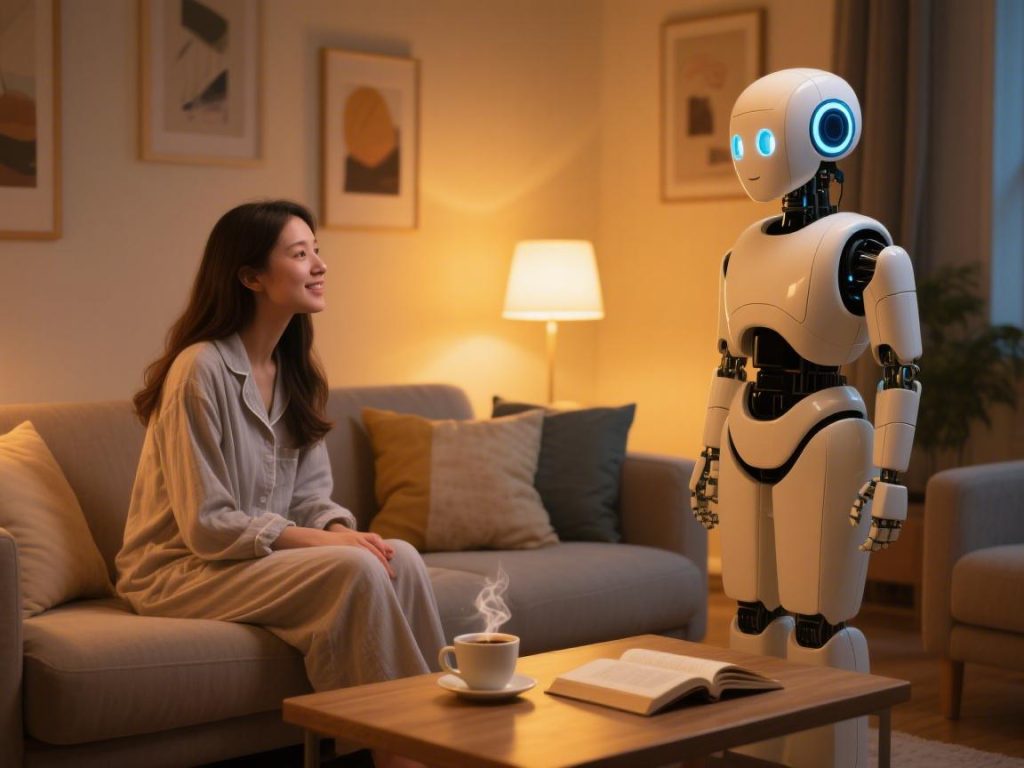
If someone told you in 2016 that ten years later your phone would chat with you, your glasses would translate menus in real time, and your car could drive you to work, you’d probably think it was science fiction. But here we are in 2026, and these aren’t proof-of-concept demos anymore. They’re as ordinary as running water.
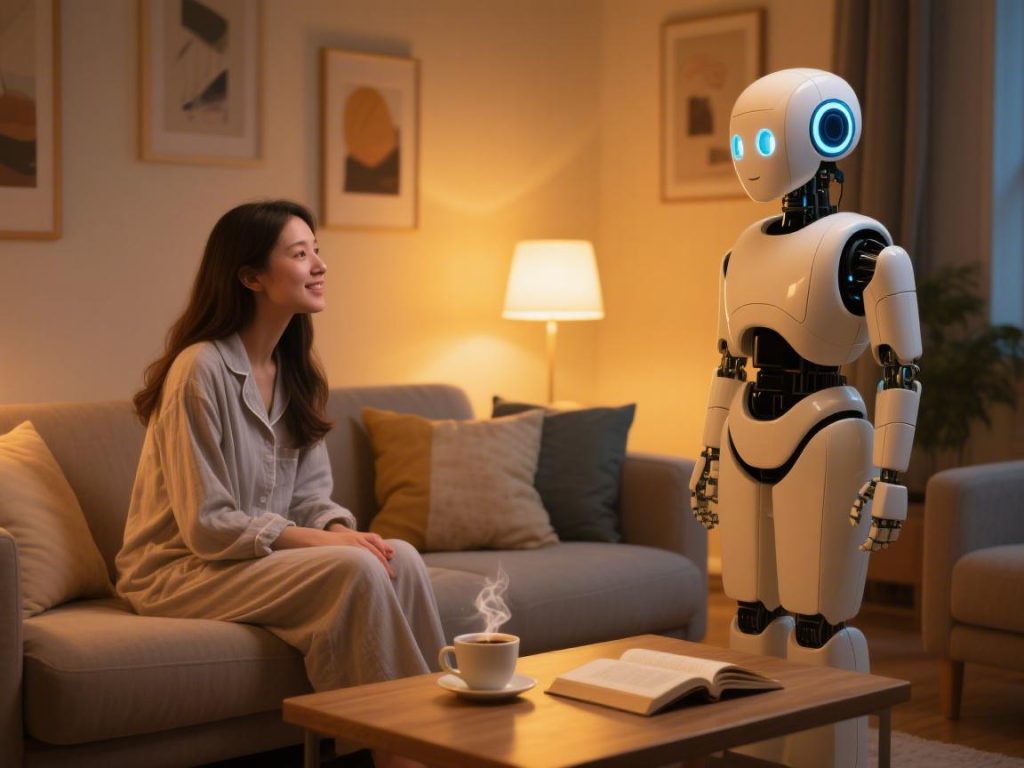
1. First thing after waking up: Your AI assistant has already planned your day
In 2026, your alarm isn’t that jarring beep you set manually. Your AI assistant picks a moment during light sleep to gently rouse you. It knows you only got to bed late because it heard you get up for water at 2am.
By the time you’re brushing your teeth, it’s already sorted your inbox: three emails that need replies at the top, a spam flyer automatically archived, your boss’s long message condensed into two bullet points. While you scrub, it’s plotted the best commute route. If you’re taking a robo-taxi, it’s already booked your pickup time.
This isn’t some niche app. Platforms like Microsoft Copilot, Google AI Mode, and Meta AI are baked into operating systems and everyday apps (Xinhua covered this in early 2026). It’s the default now, not a feature you turn on.
Frontend analogy: old AI was a manual API import. Today’s AI is a React Hook baked into the framework core. You don’t install it. It’s just there.
2. A super assistant in your ear: human-like voice interaction
Remember when Siri first launched and talking to your phone in public got you weird looks? That’s flipped completely.
A startup called Sesame AI broke through on human-like intonation. Pitch shifts, emotional inflections, even a hint of casual accent. Pop in an earbud, whisper your query, and the AI responds like a friend. CivAI founder Lucas Hasen called it a “tipping point” shift: “When AI sounds like a real person, why would anyone refuse to talk to it?”
Speaking from experience: when I’m grocery shopping, I quietly chat with AI about recipes. At the hospital, I ask it to explain my lab results in plain language. No phone required. Nobody stares. Probably because they’re doing the same thing.
3. Smart glasses: The next screen that might replace your phone
Meta Ray-Bans have already sold millions. The latest model with a built-in display can layer translucent info on the edge of your vision: email alerts, turn-by-turn directions, live translations.
Back in January, I was at a French restaurant trying to read the menu. Full French, nothing I recognized. I started taking my glasses off to wipe them, then realized I didn’t need to. The AI translation was already overlaid on the text. This wasn’t some long-running beta. It’s just the baseline feature of the glasses.
Makes me think of Google Glass back in 2013. That thing crashed so hard partly because it looked like a “probe for aliens on vacation.” This time around, companies got smarter: the hardware looks like ordinary sunglasses, and the magic lives in a talkative AI inside. Google, Pickle, and others jumped in. Rumors say Apple is cooking up something, a phone that folds open like a book.
4. AI search: A search engine with no blue links
Search Google these days and you’ll notice the top of the page isn’t ten blue links anymore. It’s a concise AI-generated answer. That’s Google’s “AI Mode” in the wild.
In other words, search engines went from helping you find answers on the internet to giving you the answer directly. Baidu is doing the same thing. The whole search experience shifted from a directory navigation tool to a conversational knowledge engine.
This has changed how I write. Before, I’d open a dozen tabs to research. Now I talk to AI right in the search bar and get answers with source citations. It still hallucinates sometimes. I wrote a whole article about AI hallucinations and the risk of misinformation in search. But from a productivity standpoint, the shift is still dramatic.
5. AI companions and digital souls: When empathy becomes an algorithm
More and more people are having deep conversations with AI these days: venting frustrations, debating philosophy, planning travel itineraries. This goes way beyond a search engine. It’s starting to feel like a “digital soul” that can understand and empathize.
Sesame AI’s breakthrough is that they intentionally keep slight breathing sounds and pauses in the voice. Not because the tech isn’t good enough, but because it makes the voice feel more human. When an AI comforts you with a gentle, hesitant tone, the psychological boundary starts to blur.
This raises serious ethical questions. Over-reliance on virtual companionship can deepen loneliness and even trigger dangerous behaviors. Tech itself is neutral. But when we hand our emotional weight to an algorithm, staying grounded is hard. It’s also necessary.
6. Robotaxis: Actually on the road now
This might be 2026’s quietest revolution.
Waymo has deployed over 2,500 driverless taxis across San Francisco, Phoenix, and Los Angeles. Some passengers already get rides on highways to the airport.
Tesla is testing Robotaxi prototypes in San Francisco. Amazon’s Zoox is picking up street hails. Uber officially launched its new autonomous taxi in January 2026. The industry consensus is clear: if you haven’t taken one yet, this year might be the time.
Not everything went smoothly. Last month a power outage in SF took out traffic lights and a bunch of Waymo vehicles froze at intersections. A properly cyberpunk scene. But most city officials still support driverless taxis. The core argument is simple: “Machines don’t drink and drive, don’t get tired, don’t get road rage. Overall safety is still better than human drivers.”
7. Smart homes evolve from voice control to environmental awareness
At the 2026 AWE (China’s home appliance expo), IDC highlighted five key shifts. Cleaning robots are moving from passive commands to proactive understanding.
Specifically, robotic vacuums now use large AI models to sense their environment and predict behavior. You haven’t even finished eating, and it’s already sweeping around your feet on the other side. It knows you sleep in on weekends, so it delays its cleaning schedule automatically.
The detail that gets me as a frontend dev: today’s robot vacuums don’t ram into obstacles anymore. They use bionic arms and wheel-leg combinations to slither around cables like a little animal. Honestly, this optimization feels way more satisfying than debugging CSS cross-browser issues.
8. AI embedded in messaging and office software: No way around it
Meta’s AI chatbot is on standby inside Instagram and WhatsApp. Even if you don’t want it, you can’t turn it off. Microsoft Copilot is locked into Windows as a system-level assistant.
Google plans to embed AI inside Gmail to summarize long email threads and draft replies. It’s also expanding “AI Mode” to online shopping and restaurant booking.
You used to hop between apps to get things done. Now AI strings it all together. Two weeks ago when I booked a flight, the AI guessed I’d also need a hotel (because my calendar had that trip) and popped up asking “want to check nearby hotels?” A bit pushy, sure, but it saved me five minutes.
9. AI providing emotional value: From tool to companion
When a voice assistant can detect frustration in your tone, it doesn’t mechanically read the weather anymore. It asks: “You sound tired today. Want me to play something relaxing?”
This emotional responsiveness is pushing AI from “tool” toward “companion.” A line from Sesame AI’s co-founder stuck with me: “We’re not building a tool. We’re building something you’d actually want to talk to.”
That probably explains why AI companion apps exploded in 2026. Some people keep journals with them. Some review their day. Some just want a non-judgmental voice to talk to.
10. The end of CAPTCHAs: Proving you’re human is getting hard
One last thing, both funny and creepy: as AI gets good enough, “prove you’re human” is turning into a genuine technical problem.
When AI can perfectly mimic human speech, writing style, and even micro-expressions, those “I am not a robot” checkboxes might be easy for AI to bypass too. In 2026, more services are rolling out multi-modal verification. Not just ticking a box, but performing a series of natural human movements within a time window.
My joke: the most valuable skill in the future might be “looking convincingly human.”
Final thoughts
The arc of AI in 2026 isn’t really about model parameter races anymore. It’s a process of technology becoming more human. Not using speed to replace people, but weaving naturally into the rhythm of daily life.
As that Xinhua piece put it: “Technology in 2026 doesn’t crash into life with a roar. It reshapes everyday rhythms the way rain soaks into dry ground, quietly, thoroughly, unavoidably.”
References:
Xinhua: “In 2026, AI will be deeply embedded in daily life”
📖 Recommended reading
Not satisfied after reading this? These articles are a continuation of the same topic
The Fatal Flaw of AI Hallucination: When LLMs Confidently Tell Lies
