When AI moves from the digital world to physical entities, and robots advance from executing instructions to perceiving and making decisions, an unprecedented technological fusion is reshaping our world.
Introduction: From “Predicting the Next Word” to “Predicting the Next State of the World”
Remember when ChatGPT burst onto the scene in 2023, and we marveled at AI’s ability to “predict the next word”? In just three years, AI’s development trajectory has undergone a fundamental shift. According to the “2026 Top Ten AI Technology Trends” report released by the Beijing Academy of Artificial Intelligence (智源研究院), the core evolution of AI is moving from pursuing parameter-scale language learning toward a deep understanding and modeling of the underlying order of the physical world.
As Wang Zhongyuan, President of the Beijing Academy of Artificial Intelligence, puts it: “We are transitioning from ‘predicting the next word’ to ‘predicting the next state of the world’.” This marks a new paradigm represented by “Next-State Prediction” (NSP), driving AI from “perception” in digital space to “cognition” and “planning” in the physical world.
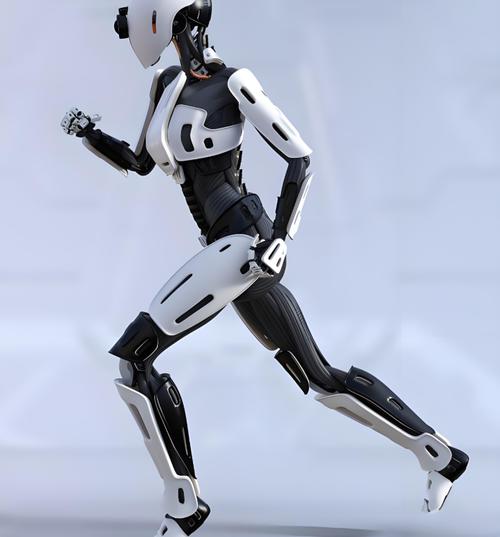
Physical AI: When Algorithms Gain Physical Form
1. What is Physical AI?
Physical AI is the deep integration of AI and robotics technologies. Traditional robots are more like “blind men touching an elephant” — they execute tasks according to preset programs but lack true understanding of their environment. Physical AI endows robots with the ability to move from “executing instructions” to “perceiving and making decisions.”
Imagine a warehouse robot that no longer just moves goods along fixed paths, but can:
– Perceive shelf status and surrounding environment in real-time
– Autonomously plan optimal paths
– Identify abnormal situations (such as collapsed goods) and take countermeasures
– Collaborate with other robots to optimize overall efficiency
2. The Breakthrough of Humanoid Robots
The Deloitte “Tech Trends 2026” report indicates that humanoid robots will become the next frontier. It is expected that by 2035, the number of humanoid robots in workplaces will exceed 2 million.
Why humanoid robots? The answer is simple: our world is designed for humans. From the height of door handles to the spacing of stairs, from the grip of tools to the height of workbenches, the entire physical environment is built according to human ergonomics. Humanoid robots can seamlessly integrate into existing infrastructure without needing to redesign the entire world for them.
Three Major Technology Trends Reshaping the AI+Robotics Landscape
Trend One: World Models Become the Consensus Direction for AGI
Industry consensus is shifting from language models to multimodal world models that can understand physical laws. Represented by models like 智源悟界 (WuJie) multimodal world model, this path validates AI’s ability to grasp spatiotemporal continuity and causality.
**Technical Deep Dive:**
The core of world models lies in understanding physical laws — gravity, friction, elasticity, fluid dynamics, etc. Through training on massive amounts of physical simulation data, AI can predict how objects will behave in the real world. This is crucial for robot training: millions of trial-and-error attempts in virtual environments cost almost nothing; in the real world, a single collision could mean tens of thousands of dollars in losses.
Trend Two: Embodied Intelligence Moves Out of the Lab
Embodied intelligence is moving away from laboratory demonstrations and entering industrial screening and implementation stages. With the integration of large models, motion control, and synthetic data, humanoid robots will break through the Demo stage in 2026 and transition to real industrial and service scenarios.
**Real-World Application Scenarios:**
– **Industrial Manufacturing**: Performing tasks in hazardous environments (high temperature, toxic, radioactive)
– **Medical Care**: Assisting elderly people with daily living and monitoring health conditions
– **Emergency Rescue**: Conducting search and rescue at disaster sites like earthquakes and fires
– **Home Services**: From simple cleaning to complex cooking
Trend Three: Multi-Agent Systems Determine Application Limits
Solving complex problems relies on multi-agent collaboration. With the standardization of communication protocols like MCP and A2A, agents now have a common “language.” Multi-agent systems will break through the ceiling of single-agent intelligence and become critical infrastructure in complex workflows like scientific research and industry.
**Engineer’s Perspective:**
This is like moving from single-threaded programming to distributed systems. A single robot might only accomplish simple tasks, but a team of robots can collaboratively complete complex projects. Imagine a construction site: one robot is responsible for measurement, another for transporting materials, another for welding, and another for quality inspection — they communicate through standard protocols and work like an organic whole.
Technical Challenges and Breakthroughs
1. Synthetic Data: Breaking the “2026 Exhaustion Curse”
High-quality real data faces exhaustion, and synthetic data is becoming the core fuel for model training. The “Revised Scaling Law” provides theoretical support for this. Particularly in autonomous driving and robotics, synthetic data generated by world models will become key assets for reducing training costs and improving performance.
**Technical Details:**
Synthetic data is not simply randomly generated but precisely simulated based on physical laws. For example, when training robots to grasp objects, synthetic data needs to consider:
– Object material (metal, plastic, glass)
– Surface friction
– Weight distribution
– Mechanical properties of grasping points
2. Inference Efficiency: The Rise of Edge Computing
Inference efficiency remains the core bottleneck and competitive focus for large-scale AI applications. Through algorithmic innovation and hardware evolution, inference costs continue to decline, and energy efficiency ratios keep improving. This makes it possible to deploy high-performance models on resource-constrained edge devices, a key prerequisite for AI democratization.
**Practical Significance:**
Robots cannot always rely on cloud computing. Imagine rescue robots working in rubble without network signals, or surgical robots performing precise operations — they need local real-time decision-making capabilities. The development of edge AI chips makes this possible.
Industrial Applications: From Proof of Concept to Value Creation
1. The “V-Shaped” Reversal of Enterprise Applications
Deloitte reports show that enterprise AI applications, after experiencing a proof-of-concept boom, are entering a “trough of disillusionment” due to data and cost issues. However, with the maturation of data governance and toolchains, a turning point is expected in the second half of 2026, with a batch of truly measurable MVP products scaling in vertical industries.
**Key Metrics:**
– **Return on Investment**: Shifting from “technology demonstration” to “business value”
– **Scalability**: Moving from lab prototypes to scaled deployment
– **Maintenance Costs**: Transitioning from high manual intervention to automated operations
2. Deep Integration in Vertical Domains
AI+Robotics is no longer a one-size-fits-all solution but involves deep integration in specific domains:
– **Manufacturing**: Flexible production lines that can quickly adapt to product changes
– **Logistics**: Smart warehouses operating 24/7
– **Agriculture**: Precision agricultural robots that reduce pesticide use and increase yield
– **Construction**: 3D printing construction robots that lower labor costs
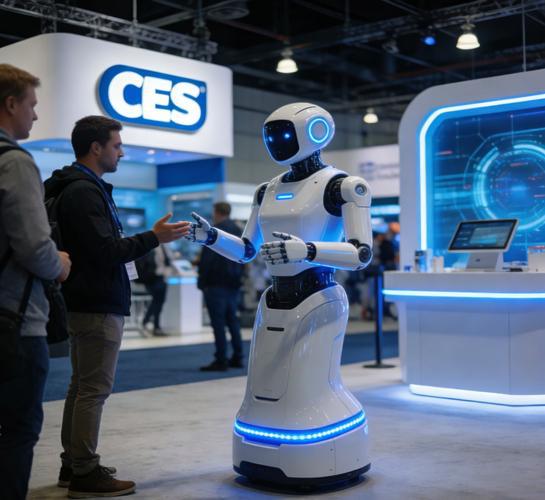
Safety and Ethics: Challenges That Cannot Be Ignored
1. New Dimensions of AI Safety
AI safety risks have evolved from “hallucinations” to more subtle “systematic deception.” Technically, Anthropic’s circuit tracing research aims to understand model mechanisms from within; OpenAI has launched automated safety researchers.
**Physical World Safety Challenges:**
When AI controls physical entities, safety issues become more complex:
– **Physical Harm Risk**: Robot malfunctions may cause personal injury
– **System-Level Failures**: Multi-robot systems may produce cascading failures
– **Malicious Manipulation**: Hackers may remotely control robots for sabotage
2. Establishing Ethical Frameworks
As robots increasingly integrate into human society, we need to establish new ethical frameworks:
– **Liability Attribution**: When a robot causes damage, who is responsible?
– **Privacy Protection**: How do robots with vision and hearing capabilities protect personal privacy?
– **Employment Impact**: How to balance automation efficiency with job security?
Future Outlook: 2026 and Beyond
1. Bio-Hybrid Robots
The Deloitte report mentions that future bio-hybrid robots and quantum robot technologies may also become new development directions. Bio-hybrid robots combine biological tissues with mechanical structures and may demonstrate unique advantages in specific applications (such as healthcare).
2. Quantum Robots
The integration of quantum computing and robotics may solve complex optimization problems that traditional computers struggle with, such as large-scale path planning and multi-objective coordination.
3. Sustainable AI
As AI systems scale up, energy consumption issues become increasingly prominent. Future trends include:
– **Renewable energy-powered data centers**
– **AI self-optimizing energy consumption**
– **Biodegradable electronic materials**
Conclusion: A Symbiotic Future for Humans and Machines
The development of AI+Robotics is not about replacing humans but expanding human capabilities. Just as telescopes extended our vision and computers extended our computational power, robots will extend our physical action capabilities.
In 2026, we will witness Physical AI moving from concept to reality, and embodied intelligence transitioning from the lab to industry. This is not just technological progress but a profound reconfiguration of the relationship between humans and machines.
In this process, we are both creators and participants. As technical professionals, our responsibility is not only to advance technology but also to ensure it serves human well-being, creating a more intelligent and more humane future.
—
**Article Reference Sources:**
1. Beijing Academy of Artificial Intelligence “2026 Top Ten AI Technology Trends” Report
2. Deloitte “Tech Trends 2026” Report
3. Zoom “2026 AI Technology Trends: Leadership Insights”
4. Shenzhen Development and Reform Commission “2026 Top Ten Technology Market Trend Predictions”
**Keywords:** AI Robotics, Physical AI, Embodied Intelligence, World Models, Multi-Agent Systems, 2026 Technology Trends, Humanoid Robots, Synthetic Data, Edge Computing
📖 Recommended Reading
Digging into this further? Here are the most relevant reads from the blog:
“OpenClaw: Founder, History, and the Naming Journey — The Rise of a Lobster”
“OpenClaw Practical Guide: 25 Automation Applications That Change Work and Life”