When cars truly begin to understand the physical environment and take responsibility for their behavioral outcomes, we stand at a historic turning point in intelligent driving.
Introduction: From “Function Stacking” to “System Intelligence”
Remember just a few years ago when we were excited that in-car voice assistants could understand “turn on the air conditioning”? In the blink of an eye, 2026’s smart cars can now comprehend complex commands like “I’m feeling a bit cold and want to listen to some light music to relax,” automatically adjusting temperature, playing soothing tracks, and even adjusting seat angles. This isn’t just technological progress—it’s the evolution of AI from “tool” to “companion.”
At CES 2026, Geely’s Full-Domain AI 2.0 technology system demonstrated the depth of this transformation. Based on the World Action Model (WAM), this system achieves cross-domain integration of intelligent driving, cockpit, chassis, and other domains, constructing a unified “whole-vehicle brain.” Imagine your car no longer being a collection of independent functions, but an intelligent entity that understands you, thinks, and makes decisions.
Technological Breakthroughs: The Fusion of End-to-End Models and Physical AI
1. From Modular to End-to-End: An Architectural Revolution
Traditional autonomous driving systems employ modular architectures—perception, planning, and control each operate independently, like a symphony orchestra without a conductor. Each musician is excellent, but the ensemble always feels slightly off. In 2026, end-to-end (E2E) models are changing all this.
TIER IV’s Level 4+ autonomous driving technology showcased at CES 2026 is a typical example. They no longer split the system into independent modules like perception, prediction, planning, and control. Instead, they map directly from multi-sensor inputs to vehicle control outputs through neural networks. This architecture reduces system complexity and enhances scenario generalization capabilities.
This is like transitioning from an “assembly line worker” to a “full-stack engineer”—previously you only tightened screws, now you’re involved from design to delivery. While the pressure increases, the sense of accomplishment skyrockets.
2. Physical AI: Enabling Cars to Understand the Real World
NVIDIA’s Alpamayo autonomous driving world model launched at CES 2026 marks the arrival of the “Physical AI” era. This model possesses causal reasoning capabilities and can handle more complex scenarios. For example, it can not only recognize “a ball rolling out ahead” but also reason that “this might indicate a child chasing after it,” thereby making more human-like and safer decisions.
The key to this capability lies in chain-of-thought reasoning. As the industry’s first chain-of-thought VLA reasoning model for the assisted driving research community, Alpamayo 1 can clearly demonstrate the logic behind each decision. Developers can see how the model step-by-step reasons through rare or novel scenarios, greatly enhancing system interpretability and safety.
3. Multimodal Fusion: The Unification of Vision-Language-Action
2026’s intelligent driving systems are achieving deep integration of vision, language, and action. The G-ASD assisted driving system jointly released by Geely and Qianli Technology employs an end-to-end model architecture, integrating multimodal foundation models, visual language models (VLM), visual-language-action models (VLA), world models, and reinforcement learning among other AI technology paradigms.
This fusion enables systems to understand more complex instructions. For instance, when you say “That red truck ahead looks like it’s about to change lanes, let’s be careful,” the system can not only identify the red truck but also understand your concern and adopt a more cautious driving strategy.
Commercialization: The Scaling of Level 3 Autonomous Driving
Policy Support: From Pilot to Widespread Adoption
2026 has seen major policy breakthroughs for Level 3 autonomous driving. Beijing, Chongqing, and other cities have opened conditional Level 3 autonomous driving testing, with Shenzhen taking the lead by passing Level 3 legislation. National standards are also advancing, with the Ministry of Industry and Information Technology releasing relevant technical standards in February 2026.
This policy support isn’t just about testing permits; more importantly, it clarifies responsibility attribution. The Ministry’s conditional access requirements specify that “before system takeover, automakers bear primary responsibility,” resolving the industry pain point of “ambiguous responsibility division” and clearing obstacles for commercial implementation.
Technological Maturity: From Laboratory to Real Roads
Technologically, 2026’s Level 3 autonomous driving exhibits three major characteristics: “scenario specialization, path convergence, and hardware independence.” Automakers no longer pursue “full-scenario coverage” but focus on “structured scenario scaling and complex scenario breakthroughs.”
For example, Beijing’s standardized highway scenarios and Chongqing’s complex mountainous road conditions have become testing grounds for automakers to accumulate long-tail scenario data like extreme weather, construction zones, and sudden obstacles. Through continuous optimization of system decision-making capabilities, driver takeover rates are significantly decreasing.
**Hardware independence** is also an important trend. Daoyuan Technology’s self-developed MEMS inertial measurement unit (IMU) chip GST80 has passed ISO 26262 functional safety product certification, reaching the highest ASIL D safety level, becoming the first domestically produced automotive-grade product to achieve this certification.
User Experience: From “Driving Tool” to “Mobile Living Space”
1. The Evolution of Smart Cockpits
2026’s smart cockpits are no longer “cold driving spaces” but are upgrading toward “scenario-based, personalized, and comfortable” experiences. Mainstream smart cockpits now feature multiple scenario modes, enabling one-touch coordination of over 50 vehicle functions including air conditioning, lighting, seats, and audio to meet different usage scenarios.
Taking the 2026 FAW-Volkswagen Magotan as an example, beyond the original 6 preset scenarios, it adds a “rear seat sleep mode” that adjusts rear seat angles, turns off lights, and reduces air conditioning airflow with one touch, creating a quiet and comfortable resting environment for rear passengers. It also supports custom scenarios, allowing users to freely combine vehicle functions to suit commuting, long-distance travel, and other diverse needs.
2. The Revolution of Natural Interaction
The core breakthrough of in-car AI large models lies in the upgrade of “semantic understanding capabilities.” Systems no longer require users to memorize fixed commands but can understand ambiguous instructions, contextual cues, and even proactively provide personalized solutions—much like human-to-human conversation.
When a user says “I’m feeling a bit cold,” the vehicle automatically increases the air conditioning temperature and closes windows; when a user mentions “wanting to find nearby restaurants,” the AI can not only recommend options matching taste and budget but also automatically plan optimal routes and remind about nearby parking information, requiring no additional operations.
Industry Ecosystem: Vehicle-Road-Cloud Integrated Coordination
1. Infrastructure Improvement
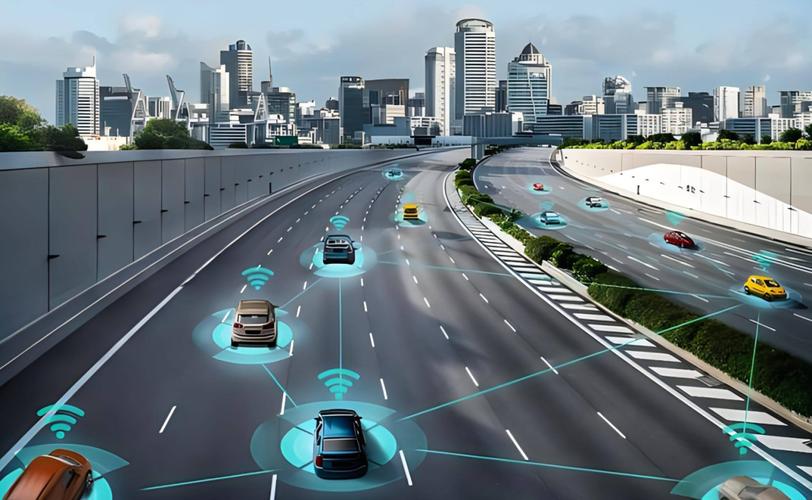
In 2026, automotive intelligence is no longer the solitary struggle of “single-vehicle intelligence” but is moving toward “vehicle-road-cloud integrated” collaborative development. China has established 17 national-level testing demonstration zones, issued over 10,300 testing demonstration licenses, and accumulated over 200 million kilometers of testing mileage.
Investment in vehicle-road-cloud integrated infrastructure continues to increase across regions. Jinan has launched bidding for its intelligent connected vehicle “vehicle-road-cloud integration” application pilot project with a budget of approximately 93.93 million yuan; Sichuan Yibin, Zhejiang Hangzhou, Shandong Qingdao, and other areas have also incorporated vehicle-road-cloud integration into their 2026 key transportation projects.
2. Deepening Ecosystem Collaboration
The implementation of vehicle-road-cloud integration relies on collaborative efforts between automakers, communication companies, and local governments. In 2026, more automakers are partnering with communication companies to jointly build cross-regional roadside perception networks, reducing individual entity investment costs.
Simultaneously, regions are promoting “AI + transportation” initiatives. Inner Mongolia plans to establish an Ordos-Baotou cross-regional autonomous freight corridor, applying unmanned container trucks at ports; Hunan is advancing digital enhancement projects for highway network monitoring, early warning, and emergency command, promoting large-scale application of smart monitoring and intelligent dispatch scenarios.
Challenges and Outlook: The Future Path of Intelligent Driving
1. Technical Challenges: Long-Tail Scenarios and Safety
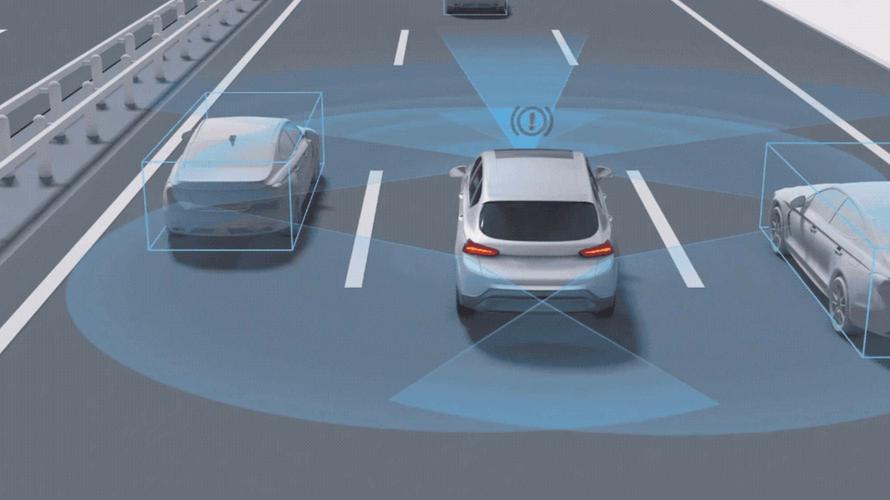
Despite significant technological progress, intelligent driving still faces challenges with long-tail scenarios. Those rare but potentially fatal situations—like animals suddenly rushing from roadside, road conditions under abnormal weather, temporary changes in construction zones—remain problems systems need to solve.
Safety remains the core of intelligent driving. As systems become increasingly complex, ensuring their stability and reliability under various extreme conditions requires more comprehensive testing and validation systems. The combination of simulation testing, shadow mode, and real-road testing will become industry standards.
2. Commercial Challenges: Cost and Popularization
Currently, high-level intelligent driving systems remain relatively expensive, primarily installed in premium models. How to reduce technological costs to levels acceptable for mainstream models is a significant challenge facing the industry.
Domestic substitution of core components like chips and sensors is accelerating. Xingchen Technology plans to mass-produce automotive-grade SPAD chips in the first half of 2026, covering resolution ranges from 192 lines to over 1,000 lines, precisely matching different scenarios’ perception accuracy requirements. This will promote LiDAR adoption in mainstream 200,000-yuan vehicle models.
3. Social Acceptance: Trust and Education
Technological maturity is only the first step; social acceptance is equally important. User trust in autonomous driving systems takes time to build, requiring automakers to gradually cultivate it through transparent technology demonstrations, comprehensive safety records, and excellent user experiences.
Meanwhile, public education is crucial. Many people don’t clearly understand the differences between L2, L3, and L4 autonomous driving, making them susceptible to marketing rhetoric. Clear communication and authentic usage scenario demonstrations will help users establish correct expectations.
Conclusion: The “iPhone Moment” of Intelligent Driving
In 2026, we stand on the eve of intelligent driving’s “iPhone moment.” Just as the 2007 iPhone redefined mobile phones, AI-driven intelligent driving is redefining automobiles—transforming from transportation tools into intelligent mobile spaces, from time-consuming commutes into value-creating experiences.
This transformation isn’t merely a technological upgrade but a fundamental change in transportation modes. When cars can understand us, think for us, and provide assistance when needed, transportation will no longer be a burden but part of life.
The future is already here—it’s just unevenly distributed. In 2026, from CES exhibition booths to mass-produced models, from technology demonstrations to real roads, AI intelligent driving is accelerating from concept to reality. As witnesses and participants of this era, we have reason to anticipate a safer, more efficient, and more enjoyable transportation future.
—
**Article Reference Links:**
1. [CES 2026’s Nine Major Trends in Intelligent Driving & Cockpits – Zhihu Column](https://zhuanlan.zhihu.com/p/2002792823850819771)
2. [2026 Automotive Intelligence Trend Analysis: AI Large Models + L3 Intelligent Driving Landing, Smart Mobility Becomes Reality – Sina Finance](https://cj.sina.cn/articles/view/7880068201/1d5b04c6901901tvkq?froms=ggmp)
3. [TIER IV to Showcase End-to-End AI Technology for Level 4+ Autonomous Driving at CES 2026 – Sina Tech](https://finance.sina.cn/tech/2026-01-07/detail-inhfmpqc7805504.d.html?vt=4)
4. [AI “Dominates” CES 2026: Automakers Double Down on Full-Domain Intelligence – Securities Times](https://www.stcn.com/article/detail/3577693.html)
5. [2026 AI Reshapes Smart Cars: In-depth Analysis of Intelligent Driving Industry – Electronic Engineering Album](https://www.eet-china.com/mp/a480824.html)
📖 Recommended Reading
How about checking out articles on other topics?
“Hermes Agent: The Deepest Dive into 2026’s Most Promising AI Agent Framework”
